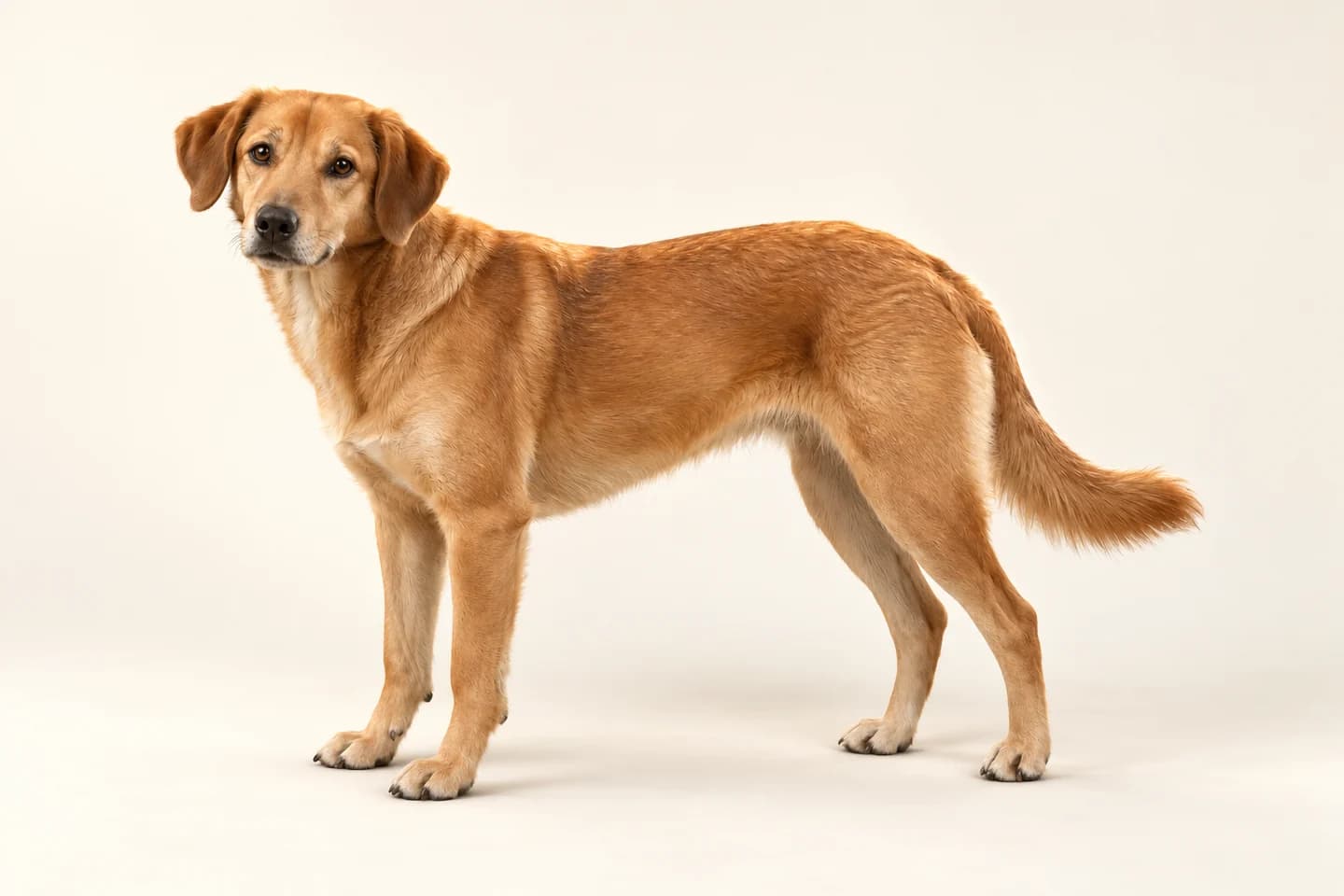
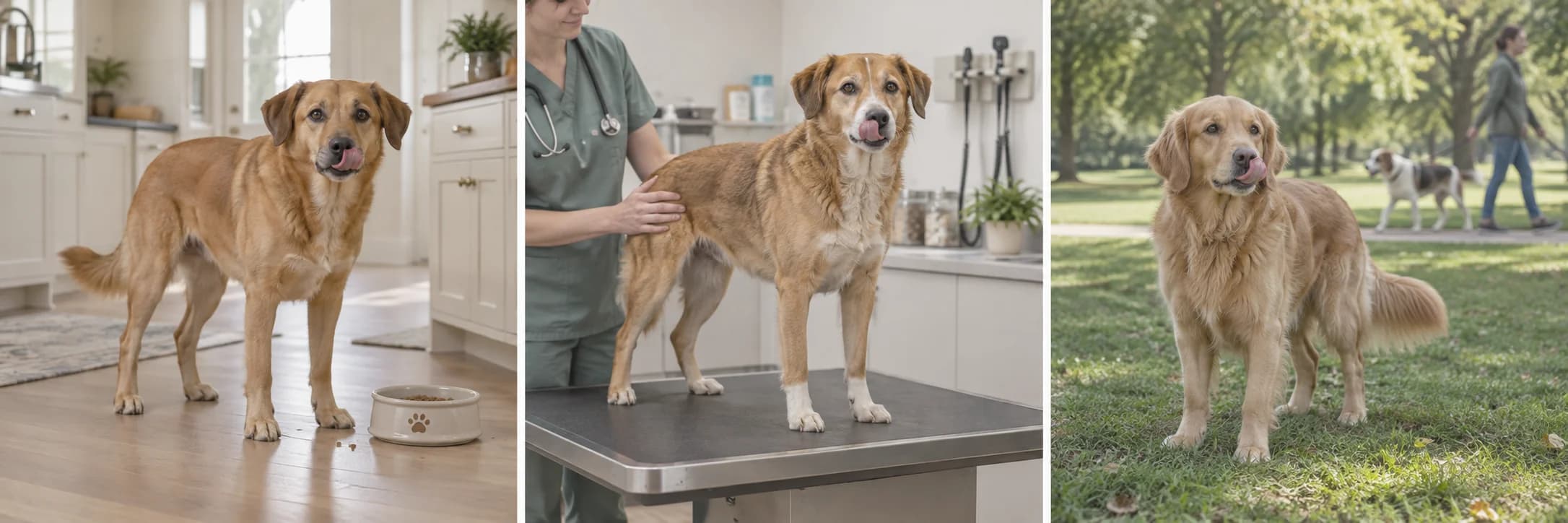
Read the whole dog.
Notice posture, movement, facial expression, distance, breathing, and the surrounding environment together.
Educational dog behavior journal
Dog behavior explained with context, not guesses.
A calm editorial guide to reading behavior through the whole dog, the setting, the baseline, and the pattern over time.
01 / The method
DogMind Journal starts with observable detail before interpretation, so a single signal is never treated as a fixed answer.
Notice posture, movement, facial expression, distance, breathing, and the surrounding environment together.
Look at what changed before the behavior, what happened during it, and what shifted afterward.
Compare the moment with that dog's usual pattern instead of a generic signal translation.
02 / Behavior Library
Source-aware articles for slowing down, observing more, and avoiding one-signal certainty.
Dog behavior is not interpreted in a vacuum. The same visible behavior can occur in different contexts and may carry different significance depending on the individual dog, the setting, and what has changed. A tail position, panting pattern, level of sociabili
Read the articleUseful dog behavior notes do not start with a label. They start with a sequence: what happened before, what the dog did during the moment, and what happened after. This structure helps a guardian notice patterns without turning ordinary observation into diagno
03Dog body language is useful, but it is easy to overread. A lip lick, yawn, tail wag, bark, or still moment can matter. None of those signals, by itself, can prove exactly what a dog feels, intends, or will do next. The safer question is not "What does this one
03 / Start Here
Build a simple habit: describe first, interpret cautiously, and know when distance or qualified local support is the better next step.
Read the method04 / Topics
Topic hubs connect behavior questions to setting, body language, stress, observation method, and professional boundaries.
Context connects behavior to setting, sequence, social pressure, environment, and the individual dog's normal baseline.
02Body Language covers observable posture, movement, tension, orientation, eyes, mouth, ears, tail, vocalization, and distance.
03Stress Signals is a cautious educational category for behaviors that may appear in stressful contexts but do not prove stress alone.
04Observation Method covers before, during, and after notes, baseline comparison, and careful separation of observation from interpretation.
05 / Glossary
Browse cautious definitions that show what a signal may describe, what context is still missing, and what not to assume.
Browse glossary06 / Videos
Educational videos extend the same context-first approach without private uploads, diagnosis, or individual behavior review.
Explore videos07 / Free checklist
Record what happened before, during, and after a behavior with a practical worksheet built for observation and context.
Get the checklist